
When To Start Going To the Dentist West Caldwell, NJ
The American Academy of Pediatric Dentistry recommends a child's first dental visit by their first birthday or within six months of the first tooth erupting, whichever comes first. Starting dental care this early allows a pediatric dentist to assess cavity risk, evaluate the development of incoming teeth, and give parents specific guidance on diet, brushing, and pacifier use before problems can develop. According to the NIDCR Children's Oral Health resource, untreated tooth decay is among the most common childhood health conditions in the United States and is largely preventable with early professional care.
Dr. Chirag Patel is a board-certified pediatric dentist who completed his specialty training at St. Joseph's Regional Medical Center in Paterson, NJ, and holds a fellowship in Dental Medicine for the Developmentally Disabled from Stony Brook School of Dental Medicine. He is a member of the American Academy of Pediatric Dentistry (AAPD) and the American Board of Pediatric Dentistry, and serves as faculty at Zufall Health Center in West Orange. All preventive services, including first dental visits, are performed in-house at Little Molars Pediatric Dentistry. Visit our what to expect at your child's first visit page for a full overview of the appointment.
When Should My Child Have Their First Dental Visit?
The American Academy of Pediatric Dentistry recommends a child's first dental visit by their first birthday or within six months of their first tooth appearing, whichever comes first. Most children begin teething somewhere between 6 and 10 months, though the timing varies. A first tooth that has erupted means the clock has started regardless of how early or late it appeared.
What Happens at a First Dental Visit?
The purpose of a first dental visit at Little Molars is primarily parent education. Dr. Patel will examine any erupted teeth and the developing bite, assess cavity risk based on feeding habits and diet, and give specific guidance on brushing technique, fluoride use, and pacifier or bottle weaning if appropriate. Parents often come in expecting the visit to be difficult, and it can be. One-year-olds frequently cry during an exam, and that is entirely normal behavior. Our team is trained to work calmly and patiently with very young children. If your child is older than one and has never seen a dentist, the right step is to schedule as soon as possible. When you call, let our team know this will be your child's first visit and how many teeth have erupted, so Dr. Patel can tailor the appointment accordingly.
“The AAPD recommends a first dental visit by age one or within six months of the first tooth erupting. Starting early allows Dr. Patel to assess cavity risk and give parents specific guidance before problems develop.”
Why Starting Early Makes a Difference
Baby teeth may be temporary, but they matter. They hold space for permanent teeth, support speech development, and allow children to chew properly for healthy nutrition. Baby teeth also have thinner enamel than permanent teeth, making them more susceptible to decay. Untreated decay in baby teeth can spread quickly, cause pain, and damage the permanent teeth developing beneath them. According to the AAPD, early childhood caries is the most common chronic childhood disease, and it is largely preventable.
Early dental visits establish a dental home, a consistent relationship with a provider who knows your child's developmental history. This makes future visits easier and allows Dr. Patel to catch issues like bite development concerns, early crowding, or the effects of extended pacifier or bottle use before they require more involved correction. Preventive services like fluoride varnish and dental sealants applied during early visits build cumulative protection that is most effective when started before decay has any foothold.
“Baby teeth have thinner enamel than permanent teeth, making them more vulnerable to decay. Early visits allow Dr. Patel to catch developmental issues and apply preventive treatments before problems can take hold.”
Preparing for Your Child's First Dental Visit at Little Molars
Little Molars Pediatric Dentistry is designed specifically for children, with an environment that helps young patients feel comfortable from the moment they arrive. For very young children, the first visit centers on exploration and familiarity rather than procedures. Dr. Patel and his team explain everything in calm, child-friendly terms throughout the appointment, and our staff is experienced in making even reluctant one-year-olds feel at ease.
The most helpful thing parents can do before a first visit is keep their own tone about dentistry positive. Children pick up on parental anxiety and may become fearful in response. Framing the visit as a quick checkup for your child's teeth, in a friendly and matter-of-fact way, is usually all the preparation needed for a toddler. For children with sensory needs or developmental differences, let our team know when you call so we can plan accordingly. Nitrous oxide sedation is available for children who need additional support, and Dr. Patel's fellowship in Dental Medicine for the Developmentally Disabled means he has specific training in caring for children with complex needs. Visit our kid-friendly dentist page to learn more about the experience at Little Molars.
“The most helpful thing parents can do before a first dental visit is keep their own tone positive. Children pick up on parental anxiety, and a calm, matter-of-fact approach makes the appointment easier for everyone.”
Questions Answered on This Page
Q. When should my child have their first dental visit?
Q. Why does starting early make a difference?
Q. How do I prepare for my child's first dental visit at Little Molars?
People Also Ask
Q. What is a dental checkup for children?
Frequently Asked Questions
Q. When should my child first see a dentist?
A. The American Academy of Pediatric Dentistry recommends a child's first dental visit by age one or within six months of the first tooth erupting, whichever comes first. Most children begin teething between 6 and 10 months. Starting this early allows Dr. Patel to assess cavity risk, evaluate tooth development, and give parents guidance on brushing, diet, and feeding habits before problems can develop.
Q. What happens at a first dental visit for a one-year-old?
A. For a one-year-old, the first dental visit at Little Molars is primarily a parent education appointment. Dr. Patel will examine any erupted teeth and the gums, evaluate the bite, assess cavity risk, and give guidance on brushing technique, fluoride use, diet, and bottle or pacifier habits. Very young children may cry during the exam, which is completely normal and expected. The goal of that first visit is familiarity and early prevention, not procedures.
Q. What if my child has never been to the dentist and is older than one?
A. Schedule an appointment as soon as possible. Let our team know it will be your child's first visit and approximately how many teeth have erupted. Dr. Patel will tailor the appointment to where your child is developmentally and start preventive care right away. Catching up early is far better than continuing to wait.
Q. Do baby teeth really need dental care if they fall out anyway?
A. Yes. Baby teeth hold space for permanent teeth and guide their eruption into the correct position. They also support speech development and proper chewing. Because baby teeth have thinner enamel than permanent teeth, decay can spread quickly and reach the permanent tooth developing beneath if left untreated. Preserving baby teeth until they fall out naturally protects your child's long-term dental development.
Q. How can I prepare my child for their first dental visit?
A. Keep the conversation about the dentist positive and matter-of-fact. For very young children, no special preparation is needed. For toddlers, framing the visit as a checkup for their teeth in a friendly way is usually enough. Let our team know when you call if your child has any sensory needs, special needs, or dental anxiety so we can plan the appointment accordingly. Nitrous oxide sedation is available for children who need extra support.
Check out what others are saying about our dental services on Yelp: When To Start Going To the Dentist in West Caldwell, NJ
Quality Pediatric Dental Services Can Transform Smiles
By visiting us as soon as possible, our team can help get your child the professional treatment they need.
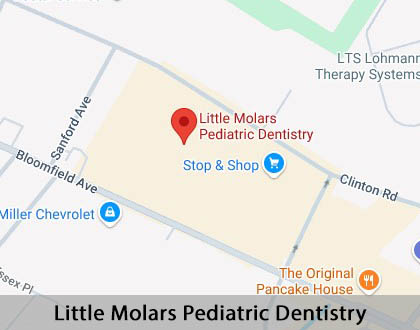

Scan here to view this page, When To Start Going To the Dentist, on mobile
Definition of Pediatric Dental Terminology
Call Us Today
Delaying the first dental visit can put the child's health at risk. If the child is overdue for a checkup, call a dental provider right away. The dentist can help your child catch up with exams and cleanings. They can also provide other preventative care to reduce the risk of cavities. Routine pediatric dentistry helps keep your child's mouth healthy for years to come.
If you are looking for a pediatric dental provider, let Little Molars Pediatric Dentistry in West Caldwell help. Call us at 862-505-2260 to learn more about our services and policies.
Helpful Related Links
- American Dental Association (ADA). Glossary of Dental Terms. 2024
About our business, license, and website security
- Little Molars Pediatric Dentistry was established in 2023.
- We accept the following payment methods: Cash, Discover, MasterCard, and Visa
- We serve patients from the following counties: Essex County
- We serve patients from the following cities: West Caldwell, Caldwell, North Caldwell, Fairfield, East Hanover, Montville, Verona, and Montclaire
- Norton Safe Web. View Details
- Trend Micro Site Safety Center. View Details

Scan here to open directions to Little Molars Pediatric Dentistry on mobile
Related Posts

Preparing Your Child For Their First Dental Visit
Your toddler drops her favorite stuffed bunny for the third time during breakfast, squeals with delight when you hand it back, and grins at you with six tiny teeth. You suddenly realize those little white squares peeking through her gums need professional care, and you haven't scheduled that first dental appointment yet. The thought of…

What Are The Signs My Baby Is Teething?
Your baby has been fussier than usual, drooling through their bibs, and gnawing on anything within reach. If this sounds familiar, teething is likely underway. It is one of the earliest developmental milestones parents face, and it can feel overwhelming when you are not sure what is normal and what is cause for concern. Fortunately,…

Baby Bottle Tooth Decay: Prevention Tips Every Parent Should Know
Baby bottle tooth decay is one of the most common dental concerns affecting infants and toddlers, yet it is also one of the most preventable. It develops when a child's teeth are frequently exposed to sugary liquids, such as milk, formula, or fruit juice, for extended periods. When these liquids pool around teeth during sleep…
Explore additional topics covered on our website:
Call Us Today

Scan here to call Little Molars Pediatric Dentistry on mobile